

For some institutions, Title IX student training is required by state law or institutional policy. For others, it's part of a broader prevention and awareness strategy. Either way, the goal is the same: give students effective access to Title IX education, so they can apply it when it matters.
No one knows when that moment will come. Sexual misconduct and the other behaviors Title IX addresses aren't limited to a particular type of student, campus organization, or stage of the college experience. Every student should be able to find clear information about what Title IX covers, how to recognize concerning behavior, where to report a concern, and what resources are available. For some students, having that information at the right moment can make a life-changing difference.
Because Title IX education is for everyone, access is the starting point, not the finish line. What determines whether the effectiveness comes down to three things: where students find this information, when they get it, and how it's delivered.
1. The Right Place
Students can't benefit from information they can't find. And when a student has a question or concern, the last thing they should have to do is dig through their inbox for an email they vaguely remember, or hunt through their institution's website for the right page. Scattered across multiple pages, departments, and outdated links, Title IX information becomes harder to find and harder for students to trust once they do.
Without one clear, reliable place to turn, a student facing a difficult situation may not know whether what happened qualifies as sexual misconduct, where to report it, or who can help. Not knowing where to start can leave students feeling completely alone. That's the real cost of information that is hard to find and hard to trust as accurate.
2. The Right Time
Students shouldn't have to encounter a Title IX issue before they learn about it. Give them this education early, during orientation, for example, so they have this awareness before they even step onto campus or log into their first class. That background knowledge gives them something to draw on when they actually need it, rather than leaving them to piece together answers in the middle of a difficult moment.
3. The Right Delivery
Title IX topics are sensitive by nature, and the way they're presented can shape whether a student feels supported or unsettled by what they're learning. A carefully built, consistent presentation treats that sensitivity with the care it deserves.
That consistency matters for another reason, too. It ensures every student receives the same accurate information, rather than a version that varies depending on who's teaching it or which department happens to run it that semester.
Standardizing the delivery, not just the content, is what makes the education equitable across the entire student population.
Delivery also needs to flex around how students learn. Some students feel more comfortable working through sensitive material on their own rather than in a group setting, so giving them a way to access it independently, on a laptop, phone, or tablet, matters. Others are balancing work, family responsibilities, and classes, which makes flexibility and a short completion time essential. Each of these circumstances can create a barrier between a student and the information they need, and meeting recognized accessibility standards is part of removing them. The more barriers an institution can remove, the more students it can actually reach.
Support a Safer Campus and Meet Compliance Requirements
A campus is safer when students can recognize concerning behavior in the moment, know how to support a peer who confides in them, and understand exactly where to go for help, rather than freezing because they're unsure. That kind of preparedness doesn't happen by accident. It's the direct result of education that reaches students at the right place, at the right time, and in a way they actually absorb.
For institutions with training requirements, there's also a practical compliance component. State laws and institutional policies often establish who must complete training and how often, and institutions need a reliable way to deliver that education and document participation.
So, what does this all look like in practice?
Deliver Accessible and Effective Title IX Education to Your Students
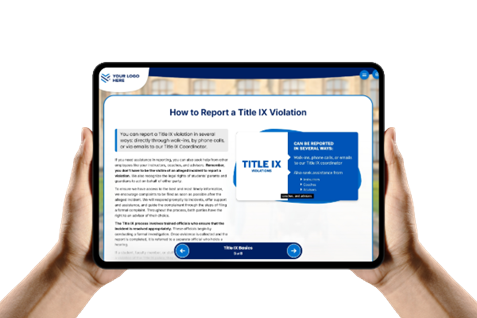
The Advantage Title IX Learning Module brings these factors together in a concise, interactive experience that meets students where they are. Developed in partnership with subject matter experts, the module is built with the sensitive nature of the content in mind and uses video and interactive content to cover the essentials:
- Title IX Defined
- Sexual Misconduct
- Consent
- The Bystander Role
- Reporting a Violation
- The Title IX Coordinator
The module works across devices, and the concise, thoughtfully paced presentation makes it easier for students to actually engage, not just click through. And because every student sees the same module, institutions know the information is consistent, current, and delivered the same way across the board. Institutions can incorporate the module into new student orientation, including Advantage Orientation, or use it as part of another required learning experience. Completion reporting gives administrators a straightforward way to track participation and support training requirements.
Take the first step to effective Title IX education at your institution. Complete the form in the sidebar to explore the Advantage Title IX Learning Module for yourself.
Related Stories: